Hyundai Bayon Launch Date: 26 अक्टूबर को होगी लॉन्च, AI Voice Assistant और 23 ADAS Features से होगी खास
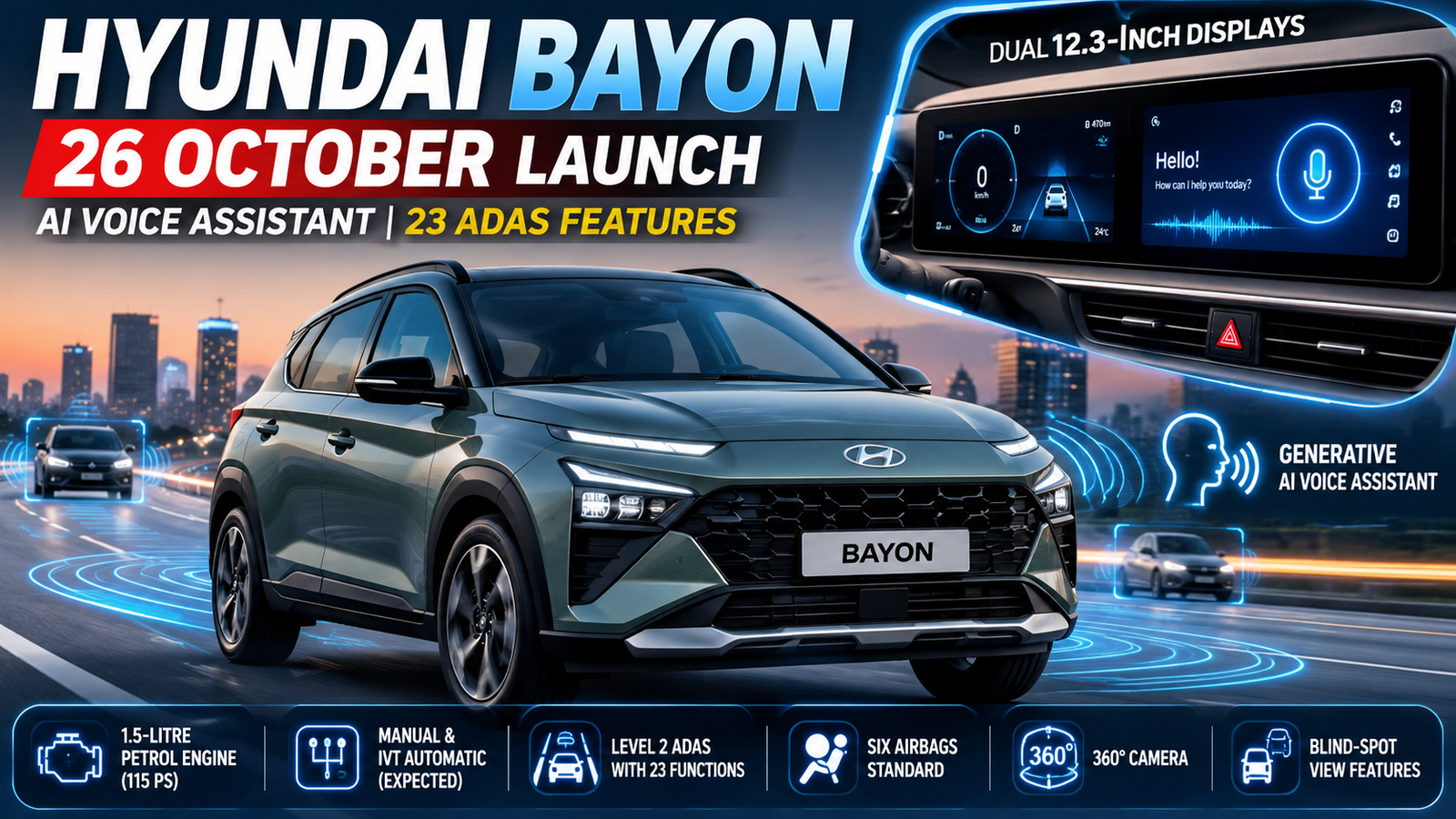
Hyundai Bayon Launch Date: Hyundai Motor India is preparing to launch the India-spec Hyundai Bayon on 26 October 2026. The new SUV is positioned between the Venue and Creta in Hyundai’s lineup and is attracting attention for its technology-focused cabin, generative AI voice assistant and advanced safety package.
Hyundai has now confirmed the most important specifications and safety details ahead of the launch. The company says bookings are already open for ₹11,000, while deliveries are scheduled to begin during the festive season. citeturn0search12turn0search13
Hyundai Bayon Launch Date in India
The Hyundai Bayon launch date in India is 26 October 2026. Customers can book the SUV through Hyundai’s official website or authorised dealerships by paying a token amount of ₹11,000. Hyundai has not yet announced the final variant-wise prices, so the price reveal is expected at the launch event.
For official booking and product information, buyers can check Hyundai India’s official website. citeturn0search12
Hyundai Bayon Engine and Transmission
The Bayon will be powered by a four-cylinder 1.5-litre MPi naturally aspirated petrol engine. It produces 115 PS of maximum power and 144 Nm of torque. Buyers will get a choice between a 6-speed manual and Hyundai’s Intelligent Variable Transmission (IVT).
| Specification | Hyundai Bayon |
|---|---|
| Engine | 1.5-litre, 4-cylinder MPi petrol |
| Maximum Power | 115 PS |
| Maximum Torque | 144 Nm |
| Manual | 6-speed MT |
| Automatic | IVT |
| Fuel Type | Petrol |
Hyundai has not yet confirmed the official ARAI mileage figure. That means buyers should wait for the final certified figure rather than relying on estimates circulating online. citeturn0search12turn0news0
AI Voice Assistant Is a Major Highlight
One of the biggest talking points is Hyundai Motor India’s first generative AI voice assistant. Hyundai says the system combines intelligence from Perplexity with voice technology from SoundHound AI.
The assistant is designed for natural conversations and can help with tasks such as road-trip planning, hotel suggestions, restaurant recommendations, weather information and sports updates. The generative AI assistant supports English, while the car separately supports more than 500 offline voice commands across English, Hindi, Hinglish, Tamil, Bengali and Telugu. citeturn0search12turn0news0
23 ADAS Features: Safety Could Be the Bayon’s Biggest USP
Hyundai is giving the Bayon its SmartSense Level 2 Pro ADAS package. The system includes 23 advanced driver-assistance functions, supported by three radars and 12 parking sensors.
- Adaptive cruise control with stop-and-go
- Lane-keeping and lane-following assistance
- Blind-spot collision warning and avoidance
- Rear cross-traffic collision warning and avoidance
- Safe exit warning
- Navigation-based cruise control
- Highway driving assistance
Hyundai says navigation-based cruise control can use map information to adjust vehicle speed for curves and designated zones on supported expressways. The company also highlights a body structure using 69% advanced multi-grade high-strength steel. Importantly, Hyundai’s statement that the SUV is engineered for 5-star safety standards is a company claim and should not be confused with an independently awarded crash-test rating. citeturn0search13turn0search15
Six Airbags, 360-Degree Camera and Blind-Spot View
Safety equipment is not limited to ADAS. Hyundai says the Bayon will offer six airbags as standard, along with electronic stability control, hill-start assist, tyre pressure monitoring, ISOFIX anchors and rear parking sensors.
Higher-spec versions add a 360-degree camera, blind-spot camera, four-wheel disc brakes and 12 parking sensors. This combination could make the Bayon a strong technology and safety-focused option in its segment. citeturn0news0turn0search13
Dual 12.3-Inch Displays and Connected Technology
The cabin gets a digital-first layout with a 12.3-inch digital instrument cluster and a 12.3-inch touchscreen infotainment system. The connected-car system uses Hyundai’s NVIDIA-accelerated Connected Car Navigation Cockpit, or ccNC.
Other notable equipment includes ventilated front seats, Bose audio, electronic parking brake with auto hold, single-zone automatic climate control and Hyundai Bluelink with more than 70 connected features. The Bayon also supports over-the-air updates for up to 19 vehicle controllers, allowing selected software improvements without a dealership visit. citeturn0news0turn0search12
Hyundai Bayon: Key Features at a Glance
| Feature | Details |
|---|---|
| Launch Date | 26 October 2026 |
| Booking Amount | ₹11,000 |
| Engine | 1.5-litre petrol |
| Power | 115 PS |
| Torque | 144 Nm |
| Transmission | 6-speed MT / IVT |
| Displays | Dual 12.3-inch screens |
| ADAS | Level 2 Pro, 23 functions |
| Airbags | 6 standard |
| Camera | 360-degree camera and blind-spot view |
| Connected Features | 70+ Bluelink features |
| OTA Updates | Up to 19 controllers |
| Colours | 10 exterior options |
| Official Mileage | Not announced yet |
| Official Price | To be announced |
Hyundai Bayon Price in India: What to Expect?
Hyundai has not announced the final price yet. Since the Bayon is positioned between the Venue and Creta, its pricing will be important for its competition in the midsize SUV space. Some industry reports expect an aggressive positioning, but the final ex-showroom price should be treated as unconfirmed until Hyundai officially announces it. citeturn0news6turn0search15
Hyundai Bayon Rivals
The Bayon is expected to compete in a crowded SUV segment. Depending on its final price and variant strategy, rivals can include the Maruti Suzuki Victoris, Toyota Urban Cruiser Hyryder, Grand Vitara, Kia Seltos, Skoda Kushaq, Volkswagen Taigun, Honda Elevate and Renault Duster.
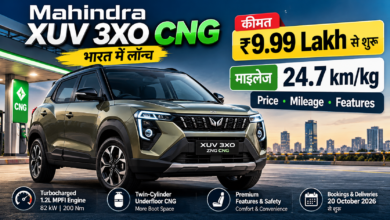
Newsbox7 readers can also check our latest Mahindra XUV 3XO CNG price, mileage and features report for another SUV option, and our Honda 0 Alpha EV launch update for the latest electric-SUV story.
Should You Wait for the Hyundai Bayon?
If your priorities are technology, safety features and a feature-rich cabin, the Bayon deserves attention. The combination of a 115 PS petrol engine, dual 12.3-inch displays, generative AI voice assistant, 23-function Level 2 ADAS, six airbags and a 360-degree camera gives it a strong equipment list.
However, the most important pieces of the buying decision—final price, variant-wise equipment and official mileage—are still pending. These details will determine whether the Bayon can offer a compelling value proposition against established rivals.
Hyundai Bayon Launch: What We Know So Far
Hyundai Bayon will officially launch in India on 26 October 2026. Bookings are already open for ₹11,000, while deliveries are expected during the festive season. With its AI-powered voice assistant and 23-function Level 2 ADAS package, the Bayon is shaping up as one of the most technology-loaded Hyundai SUVs in its class. citeturn0search12turn0search13
FAQs
When will Hyundai Bayon launch in India?
The Hyundai Bayon is scheduled to launch in India on 26 October 2026.
What engine does the Hyundai Bayon get?
It gets a 1.5-litre four-cylinder naturally aspirated petrol engine producing 115 PS and 144 Nm.
Does Hyundai Bayon get ADAS?
Yes. Hyundai’s SmartSense Level 2 Pro ADAS package offers 23 advanced driver-assistance functions.
How much is the Hyundai Bayon booking amount?
The booking amount is ₹11,000 through Hyundai’s official website or authorised dealerships.
Has Hyundai announced the Bayon price?
No. The final variant-wise ex-showroom prices are expected to be announced at the launch.
Source: Hyundai Motor India official announcements and latest automotive reporting. This article will be updated when Hyundai announces the official price, variants and mileage.